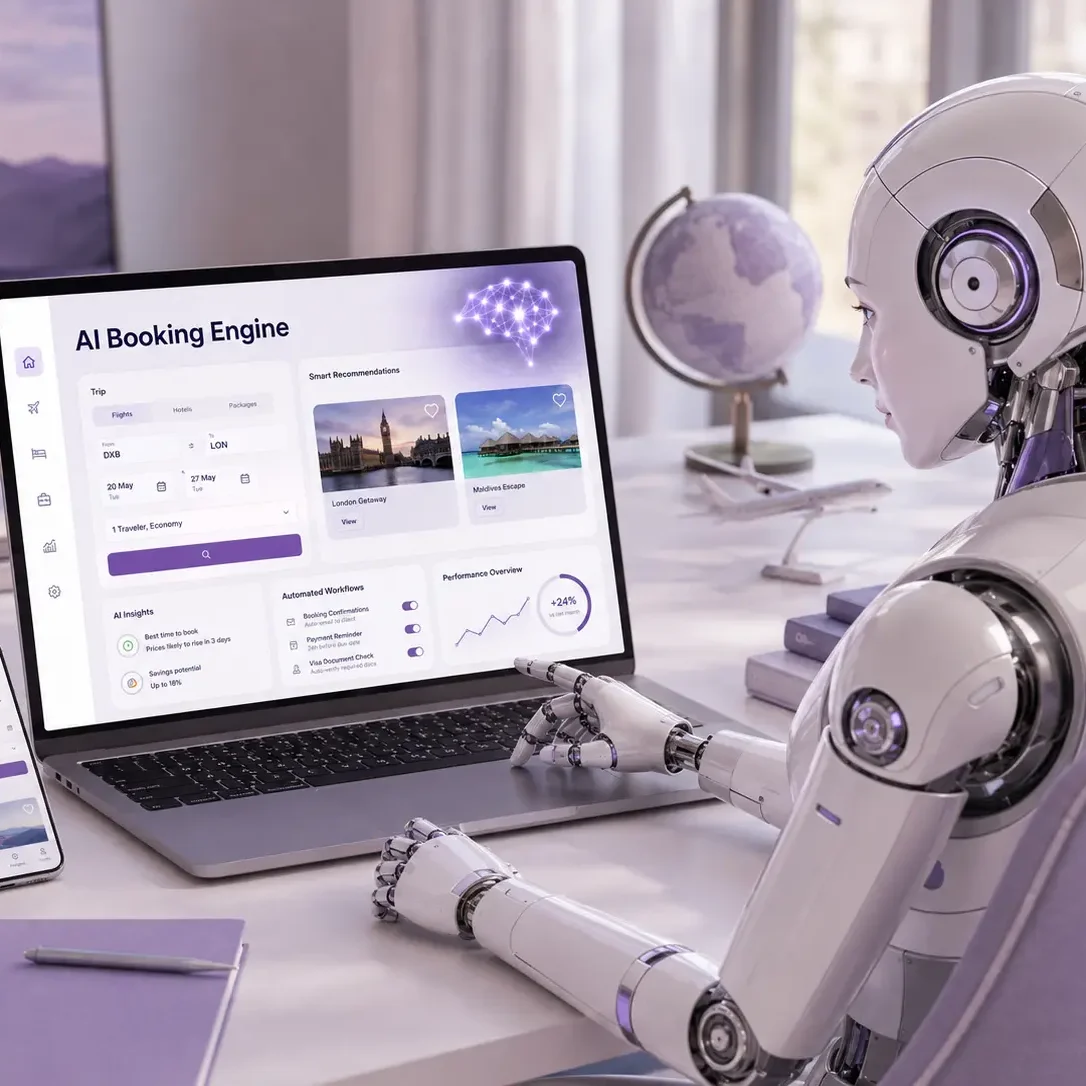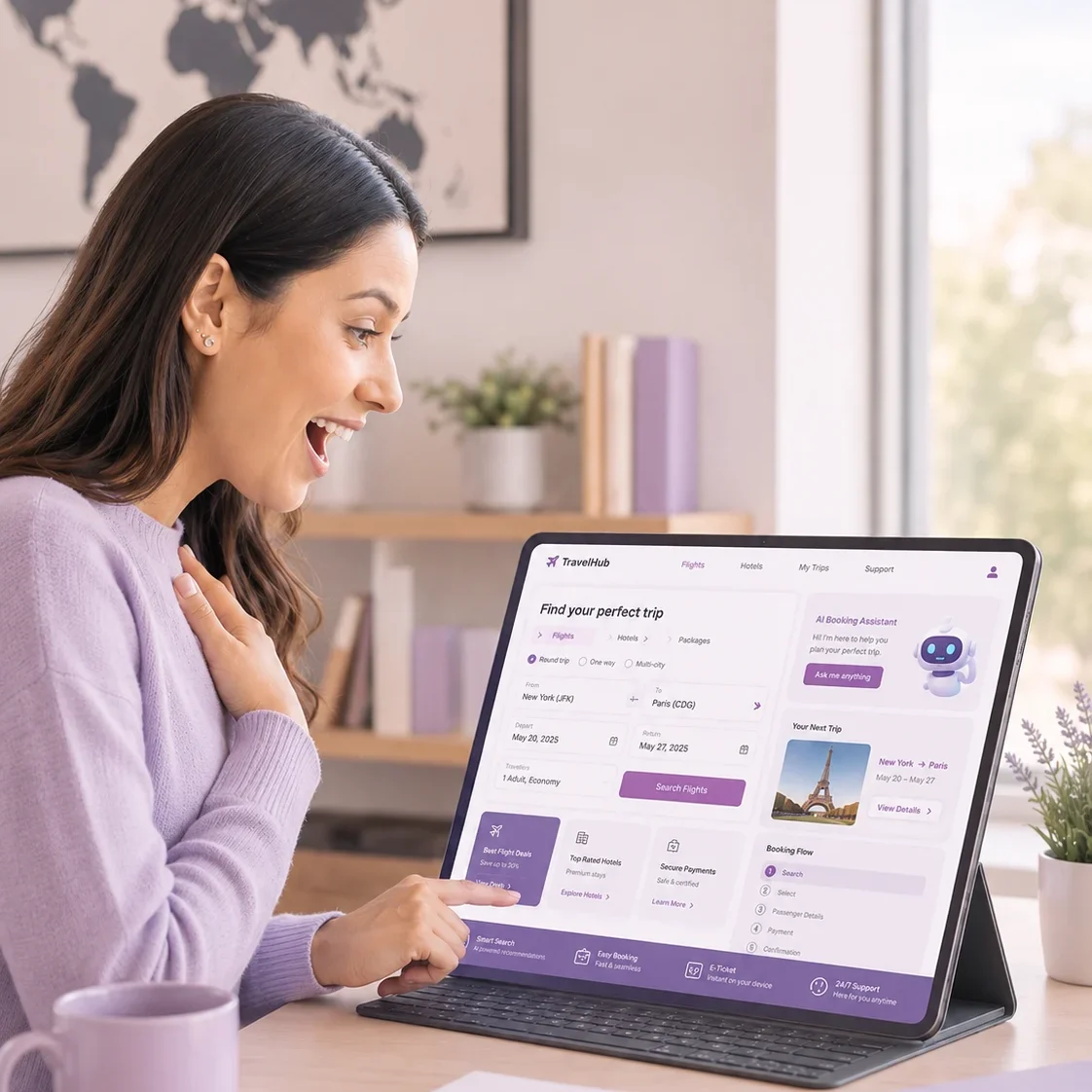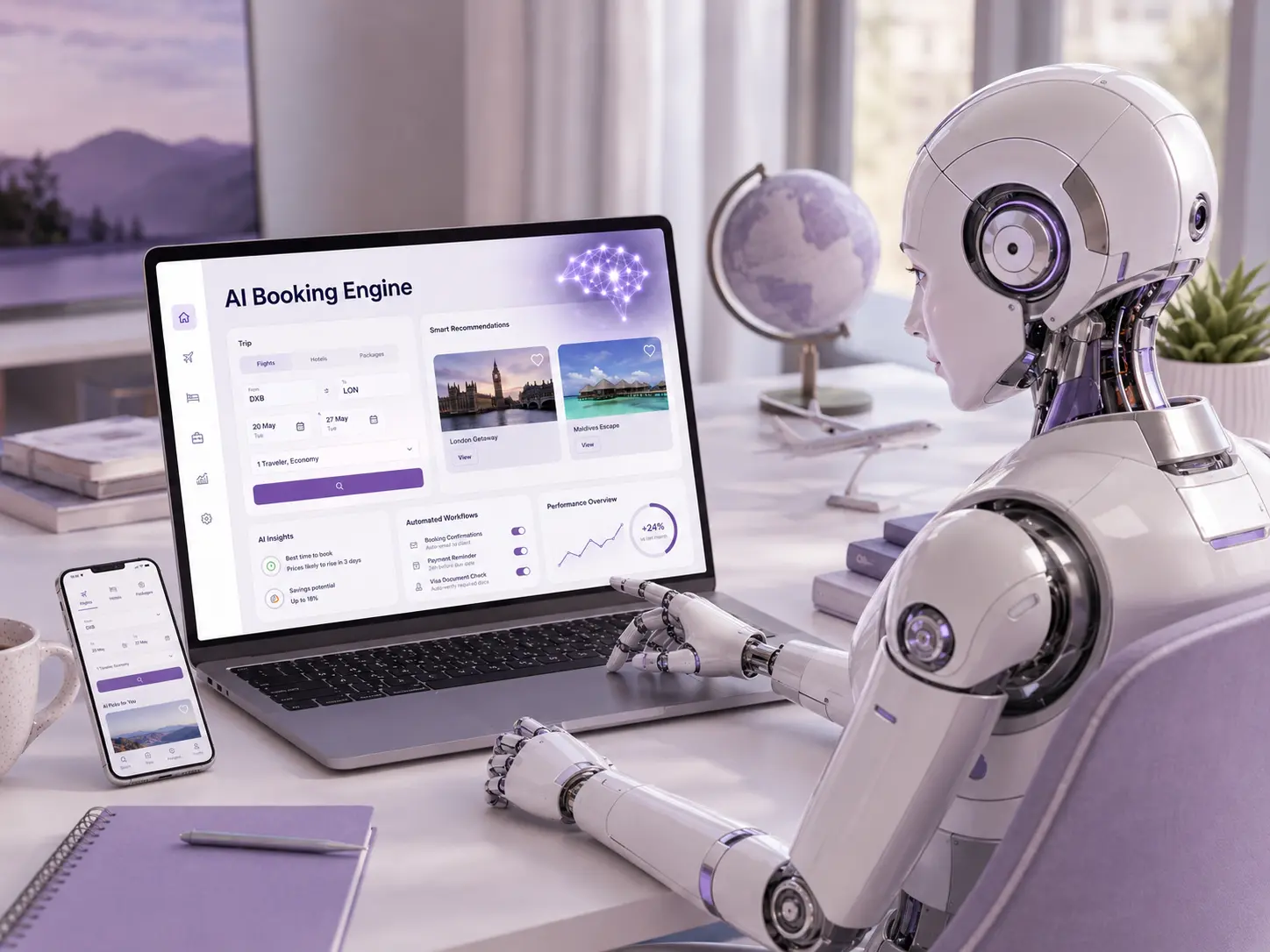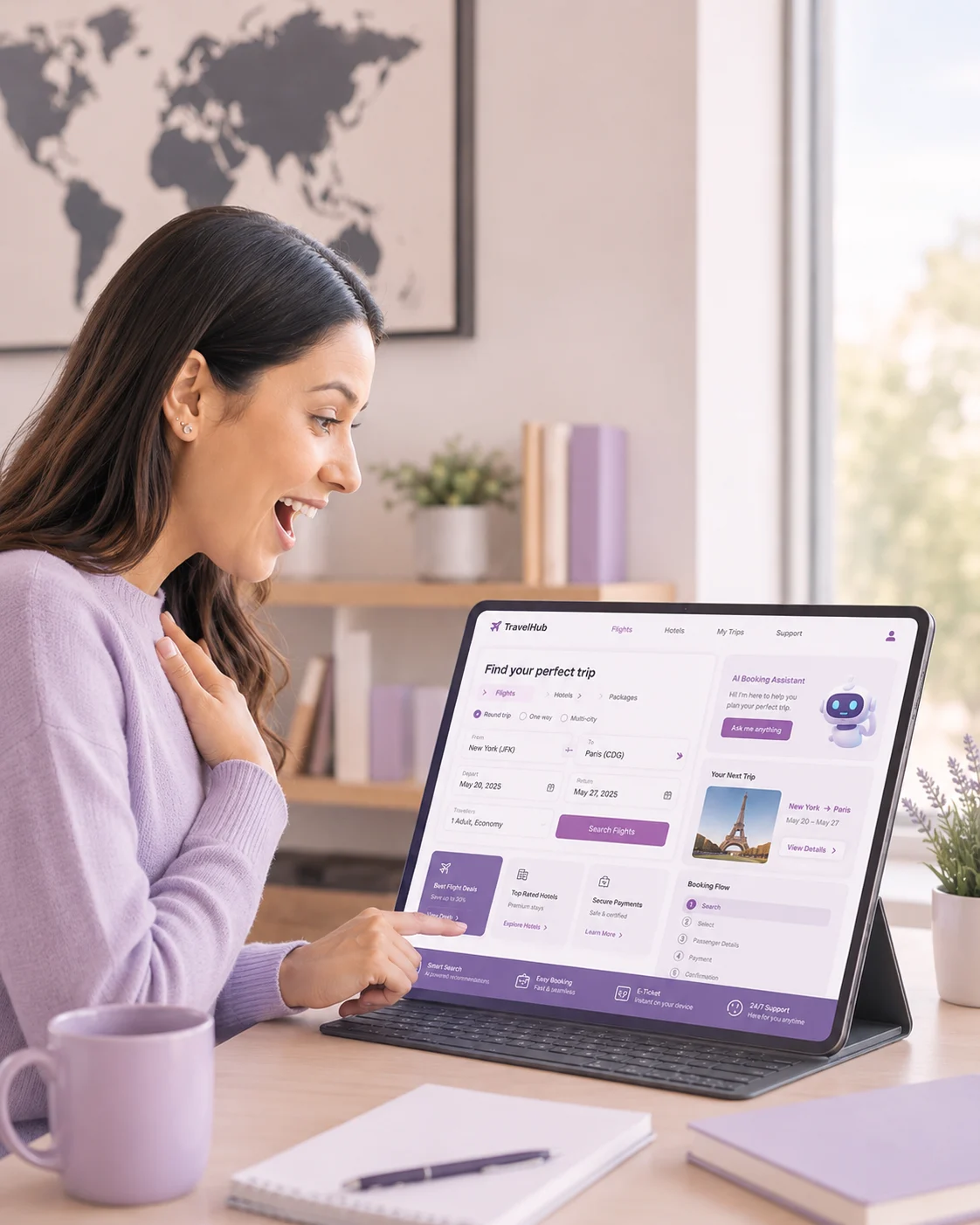
In the travel industry, Internet Booking Engines are at the core of almost everything that happens online. They enable travellers, travel agents, sub-agents, corporate users, and business travellers to search, compare, book, and manage travel products through digital platforms.
When it comes to Internet Booking Engines, our service portfolio includes consultancy, supplier and technology selection, RFI and RFP management, booking engine implementation, API integration, user interface and user experience development, custom workflow development, payment gateway integration, project management, testing, launch support, optimisation, and ongoing technology advisory. Depending on the business model, Internet Booking Engines can be designed for B2C, B2B, or B2E environments and are widely used by online travel agencies, travel agency websites, consolidators, sub-agencies, business travel agencies, corporations, and other travel businesses.
1. IBE Consultancy & Vendor Selection
2. Custom Development with Client Hosting & Source Code
3. Booking Engine Implementation & 2nd level Support

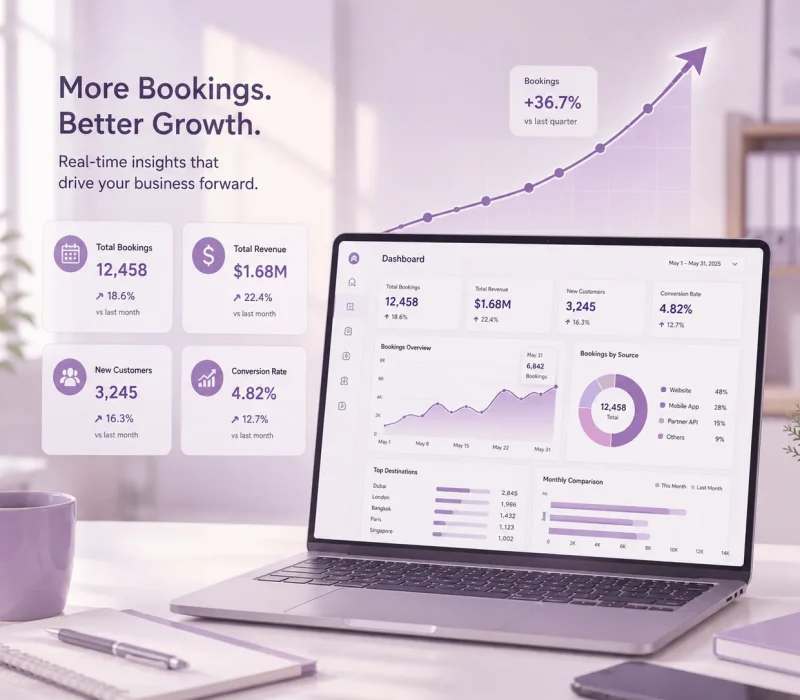
4. Booking Engine Adoption
4. B2C IBE - Marketing Management
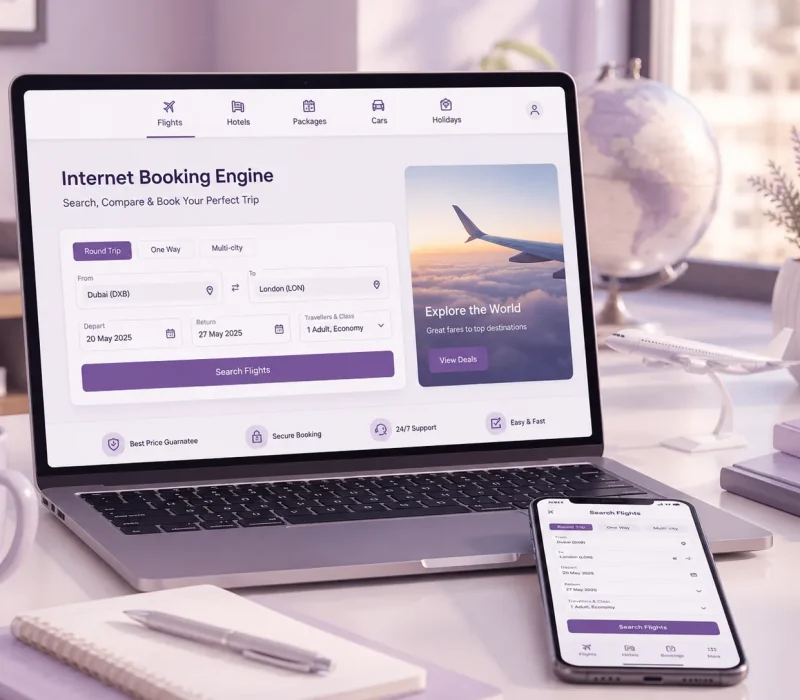
1. What is an Internet Booking Engine (IBE) ?
An Internet Booking Engine is an online platform that enables users to search, compare, book and manage travel products. Depending on its configuration, an IBE may support flights, hotels, holiday packages, transfers, activities, insurance and other travel services.
2. What are the main types of Internet Booking Engines?
The main types are B2C booking engines for individual travellers, B2B booking engines for travel agencies and sub-agents, and B2E or corporate self-booking tools for companies and business travellers. Specialised platforms are also available for DMCs, tour operators, hotels, airlines, car rentals and limousine companies.
3. Does every travel agency need an Internet Booking Engine?
Not necessarily. The decision depends on the agency’s business model, booking volume, customer base, products, operational capacity and budget. Some agencies may benefit more from a professional enquiry-based website, while others may require a complete B2C, B2B or corporate booking platform.
4. Can any travel agency successfully implement an Internet Booking Engine?
Any travel agency with a suitable budget can implement a booking engine. However, its success depends largely on the agency’s online strategy and the actions taken after the technology provider delivers the platform.
5. Which is the travel industry’s best Internet Booking Engine?
There is no single booking engine that is best for every travel business. The right platform depends on the required products or content, target markets, supplier connections, operational workflows, commercial model, scalability, delivery history, supplier profile, support structure, available budget and more. A good consultancy can help you to find whats best for you.
6. How a travel technology consultant help us select a booking engine?
An independent consultant (not a particular booking engine reseller) can analyse your business requirements, prepare an RFI or RFP, evaluate suitable technology providers, compare commercial and technical proposals, review integrations and guide the project through implementation, testing and launch.
7. Should we choose a ready-made booking engine or custom development?
A ready-made platform may offer faster implementation and a lower initial investment, while custom development provides greater flexibility, ownership and control. The right choice depends on your workflows, integration requirements, budget, timeframe and long-term technology plans.
8. What supplier connections can be integrated with an IBE?
An IBE can be connected to GDSs, NDC platforms, airline APIs, hotel suppliers, consolidators, bedbanks, transfer providers, activity platforms, insurance providers, payment gateways and more. The available connections depend on the booking engine and the supplier agreements held by the travel business.
9. How much does an Internet Booking Engine cost?
The cost varies according to the supplier profile, platform type, number of products, supplier integrations, customisation, user volumes, markets, payment gateways, hosting and support requirements. Commercial models may include setup fees, monthly subscriptions, transaction charges, revenue sharing or custom development costs.
10. Is launching an IBE enough to generate online bookings?
No. The platform must also be supported by suitable products and pricing, special deals, trained staff, reliable operations, customer awareness and ongoing marketing. Search visibility, campaign management, content updates, promotions and user adoption planning all influence its long-term performance.